

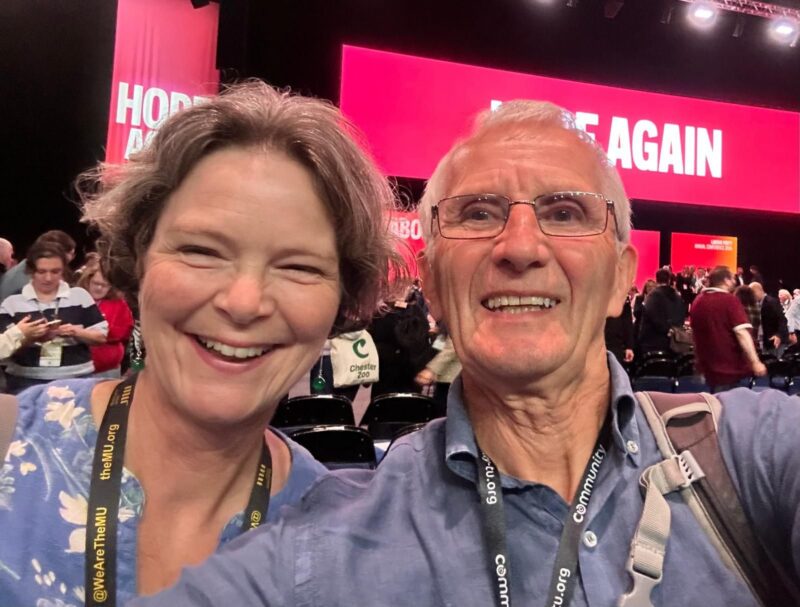
Written on Wednesday afternoon on the way home from Conference.
A little while ago I left Liverpool along with a lot of other slightly sleepy but very satisfied Labour Party members on a (soon to be nationalised!) Avanti West Coast train. I had experienced – I suspect like many others – a change of mind in the course of the week.
I arrived for the Women’s Conference Fringe on Saturday, not in the most positive mood, in spite of the sunshine sparkling over the Mersey. I don’t think I was alone in feeling that way, for two reasons. One was the exclusion of trans women as delegates to Women’s Conference following the supreme court’s judgement in 2024. For personal reasons, I find it particularly disheartening and unnecessary; it sets up a sense of division where instead we need healing. The second was the general sense of chaos and anxiety that has dogged many of us before and since the May elections. We are impatient for change but wonder, given the scale of the challenge and the frustrations of having it addressed in bite-size pieces, whether such change is really possible. In effect, can we actually dare to hope?
By yesterday afternoon, yes – we can!
At all the events I attended and in all the speeches I heard, there was never a sense that there isn’t enough expertise, enough skill or enough drive and commitment to deliver. The right people were always in the room and prepared to accept when things need to be done differently. Like Angela Eagle, Secretary of State for the environment, when she acknowledged that lessons need to be learned from the roll-out of the Sustainable Farming Incentive last week. Whatever our political opponents would have us believe, however, governing is actually messy, complicated and time consuming. Our public services, food producers and many others are fire-fighting at the limits of capacity – quite literally in the case of members of the Fire Brigades Union. Governing well is not only difficult to do but highly constrained.
As Labour members we meet people on the doorstep who need things to change immediately and we ourselves are frustrated by not seeing things improve as quickly as we feel is needed. This is made worse by the fact that we all now live in a world that feels as if it is moving fast around us and in which we are often presented with simplistic arguments which ignore the messy detail and promise instant change.
As I hunch over my screen to write this, I have Lisa Nandy’s words in my head about enabling our young people to put down their phones and instead make real and lasting connections in the arts, in youth services and with each other. Our Labour government is making that possible with both legislation and services. I hear the voices of all the panellists yesterday at Labour SERA’s event acknowledging the fundamental importance of looking after nature in order to secure a safe and sustainable future. And THAT speech, where our new prime minster acknowledged the elephants in the room. He voiced the need to reset our relationship with Europe, with our utilities, and with our voters. He passionately expressed the need for change to be so much more than incremental service improvements.
To paraphrase Lucy Powell’s wonderful analogy to end conference today: the team is on the pitch, and all the players are as one.
Thank you, Conference.
Emma Bishton 30-9-26